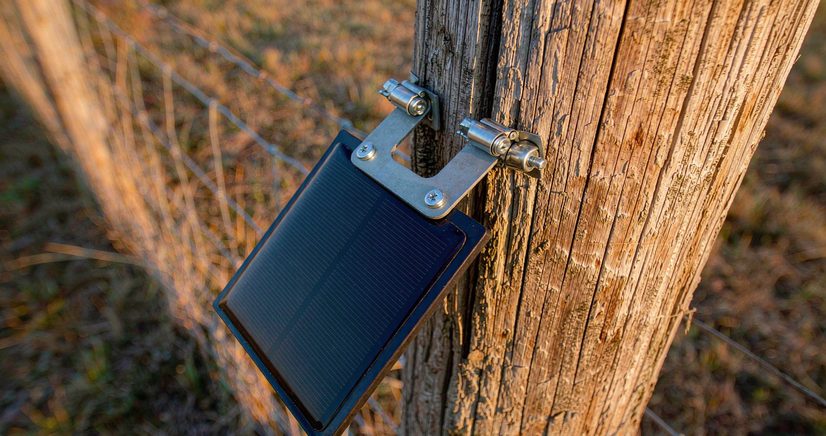
The request came from a farm in Iowa that rents its fence line. No holes in the posts, no screws in the rails, and the panel still has to survive a combine passing at four metres. That rules out every mount we were shipping at the time, so we built a clamp.
What the job needs
- Two stainless band clamps sized for the post — 100 mm covers most round timber and steel pipe.
- A mounting plate that bolts to the clamps and carries the panel at a fixed angle.
- A socket wrench, a 10 mm socket, and something to cut the band tail.
- Eleven minutes, if the post is round.
No drill, no anchors, no sealant. Nothing penetrates the post, which is the whole point: a treated post with a screw hole in it is a post that rots from the inside out, and a rented fence line does not belong to the person installing the panel.
The bracket
The plate is a single piece of 2 mm galvanised steel, bent to hold the panel at roughly 40° from horizontal. Forty degrees is the compromise: steep enough to shed snow and rain, shallow enough that a summer sun still hits the face rather than the edge.
The two clamps are independent, which is what makes it survive vibration. A single wide clamp looks stronger and is not — it works loose as the post dries and shrinks. Two narrow clamps 120 mm apart hold their torque.
Fitting it
- Offer the plate up to the post at the height you want the panel’s bottom edge, not its centre.
- Thread both bands through the plate’s slots, close them finger-tight, and check the plate is level before tightening.
- Tighten to firm, not brutal. Stainless bands bite into softwood and a crushed post is a loose post.
- Cut the tails, fold them flat, and file the cut end — a sharp tail at eye height is the most common injury in this job.
- Bolt the panel to the plate, then check the cable route before you tighten the last bolt.
Where it goes wrong
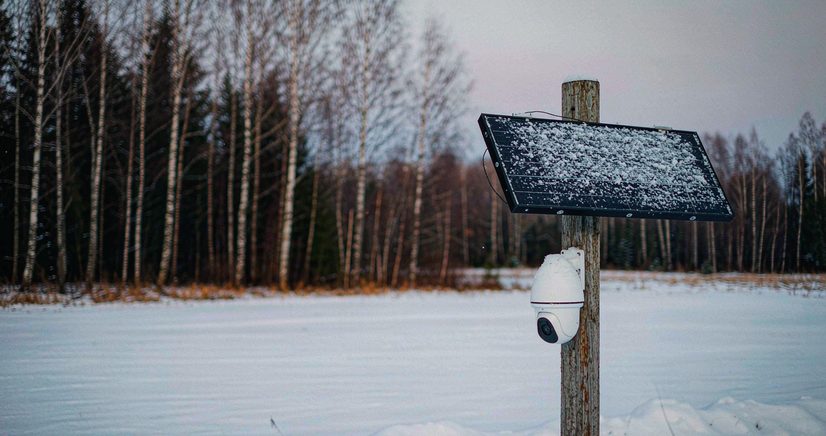
Shadow. A post-mounted panel is usually the lowest thing on the fence line, which means it sees grass, weeds and, in winter, drift. Put the bottom edge 40 cm above the settled snow line and keep the first metre of ground clear.
Cable chafe. The cable wants a drip loop and a clip on the sunny side of the post. Zip-tied tight against the north face, insulation cracks within two winters.
Wind. A panel is a sail. If the post moves when you push it, the panel will move more. The clamp will hold; the post is the weak link.
Angle by latitude, roughly
If the mount is adjustable, set it to your latitude for year-round performance, latitude plus 15° for winter, latitude minus 15° for summer. On a fixed farm install, take latitude plus 10° — you are trading a little summer output for a panel that sheds what falls on it.
The clamp ships with the fence-panel kits; the panels themselves are on the range page. If your post is a steel T-post rather than round timber, say so when you order — that bracket is a different part.