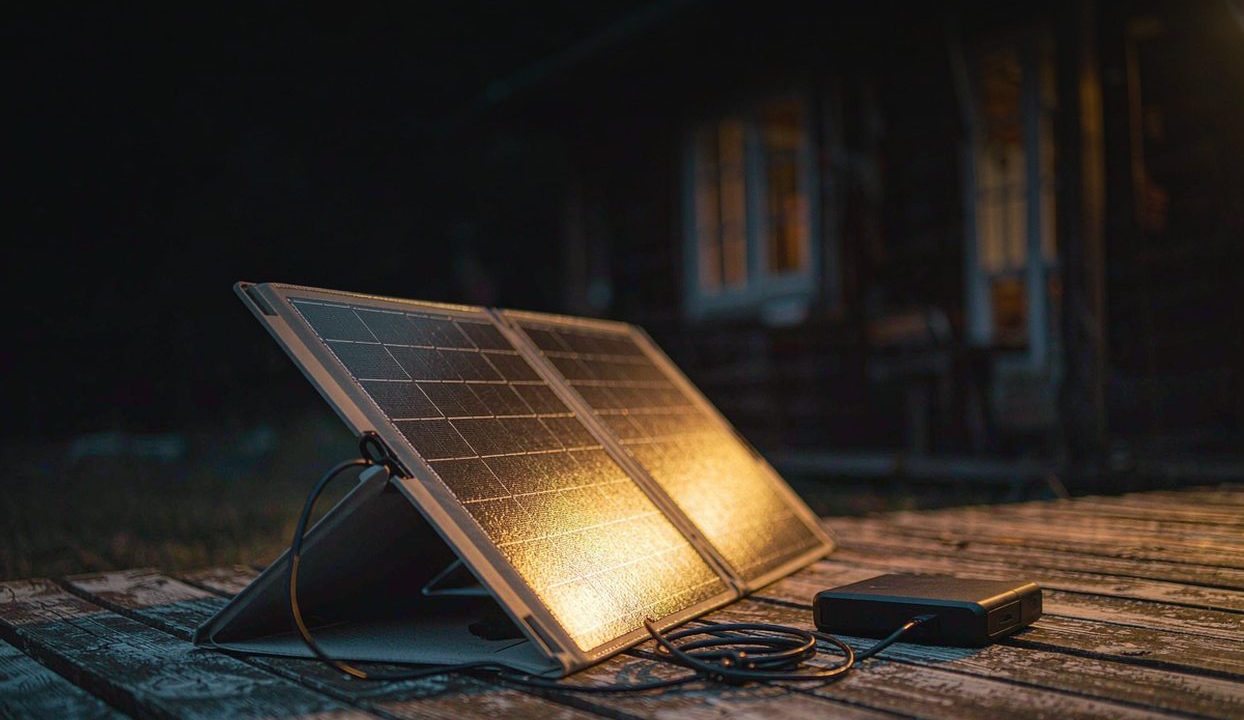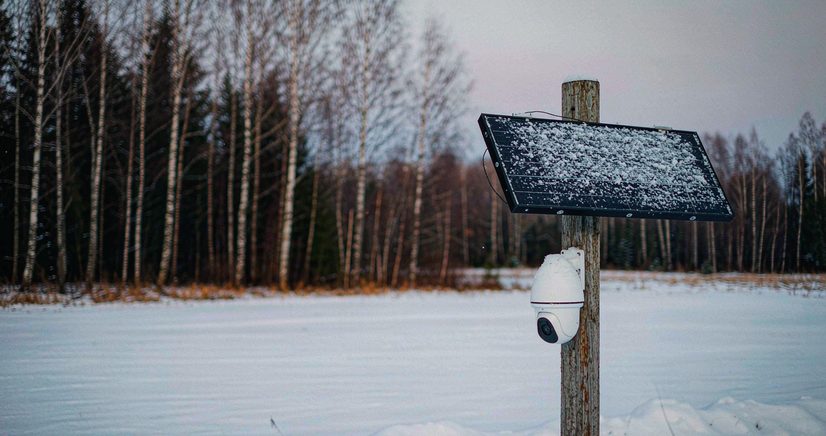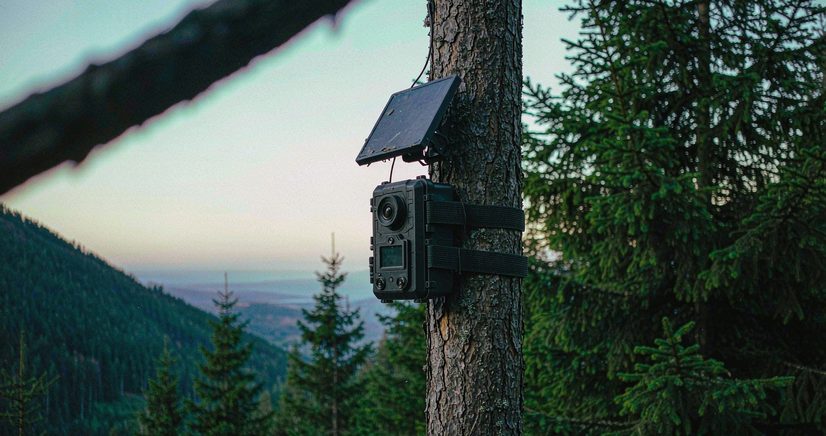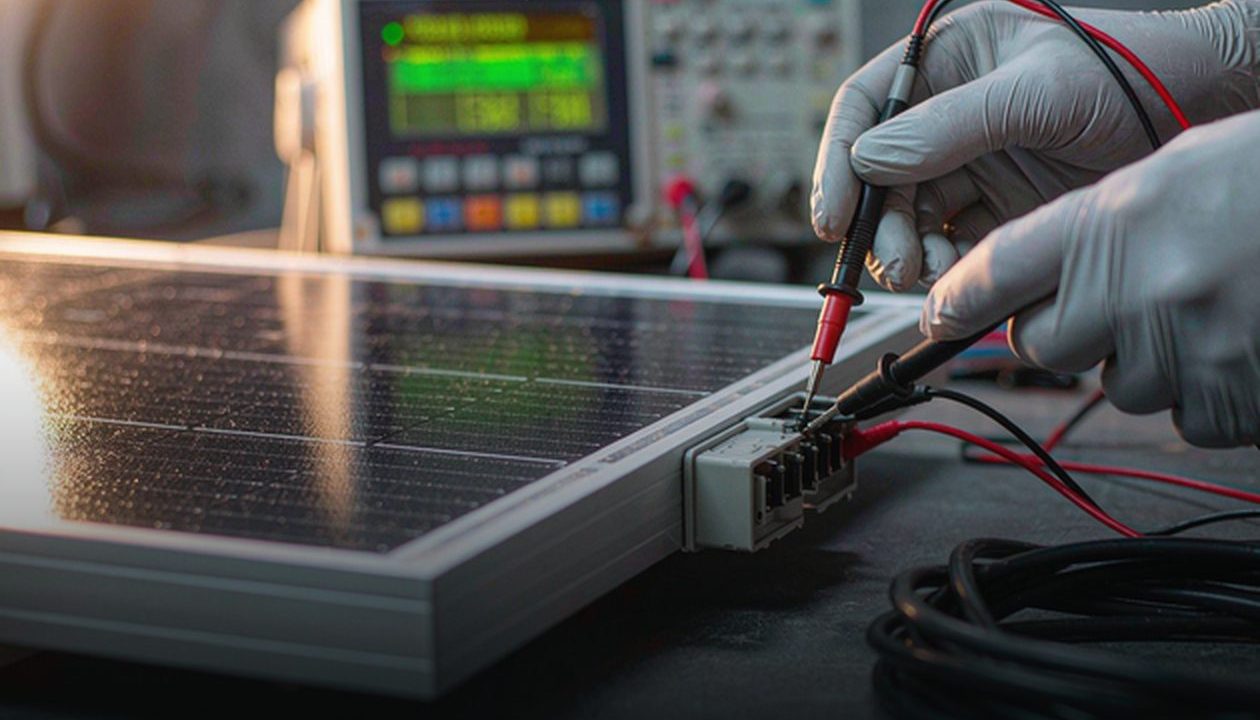
Four days, one island of carpet in a hall full of booths, and a table with the 2W–110W range laid out next to two camera kits and a box of brackets. Most of the show was not selling. It was answering the same six questions, in slightly different words, to installers, distributors and two camera brands who came back a second time with a colleague.
This is the report we promised to send. It is also the most useful thing we brought home: a list of what the people who actually fit these panels are worried about, in their order of worry.
Why a panel show, not a camera show
A security camera is a solved product. The panel that keeps it alive through February is not — it is the part that fails quietly, three months after the install, when the app goes dark and nobody knows whether it was the camera, the SIM card or the four hours of winter sun. So we stood at a show about cameras with a table full of panels, and let people pick them up.
The six questions that came up every day
1. “Will this survive a Hong Kong summer?”
Heat and humidity, not cold. The answer is in how the panel is laminated and how the junction box is potted, not in the wattage. We opened a unit on the table so people could see the seal and the bypass diodes; that single gesture ended more conversations than any datasheet.
2. “4G or Wi-Fi — does the panel care?”
Not about the radio, no. It cares about the budget: a 4G camera wakes, connects and uploads more often than a Wi-Fi camera on the same site, so the same panel buys fewer days of autonomy. Two buyers had sized a 10W panel for a 4G camera on a site that never sees direct sun, and both left with the maths redone on paper.
3. “How many watts for the camera I already own?”
The most common question, and the one worth writing down properly. A camera’s own spec sheet gives the battery capacity and the standby draw, which is enough to size a panel once you know the site’s worst month. Our buying guides walk through the same calculation, and the paddle in the kit has the short version.
4. “Does the app work in Thai, Vietnamese, Arabic?”
For the camera kits, yes for the languages the camera firmware supports — the panel has no app of its own, because a panel that needs an app is a panel with a failure mode. This surprised several visitors, in a good way.
5. “Can it go on tile, metal, or a wall I am not allowed to drill?”
The bracket question, and the one that decides whether an install happens at all. We brought the clamp mount and the strap mount, and the installation walkthrough for the fence-post version was the most photographed page on the stand — photographed off a laptop screen, because the show Wi-Fi was the show Wi-Fi.
6. “What is the minimum order, and which certificates do you hold?”
Answered per market rather than in a single number: the certificates are listed on each product page, and the current PDFs go out with the quotation. Nobody was impressed by a badge on a booth wall; everybody asked for the document.
What we changed in the sample kit
Three things, all small, all from the same four days:
- A printed charge-budget card. Camera watts in, panel watts out, worst-month sun hours, one line for the answer. It replaces a conversation that took ten minutes and usually ended with a photograph of a whiteboard.
- A short cable option. Half the booths we walked past had a panel bolted directly above the camera and four metres of cable coiled behind it.
- A QR code to the wattage guide on the back of the card, because the follow-up email was always the same question again.
What we could not answer
Runtime below −30 °C. We have field numbers from Minnesota and from a cold store in Shandong, and neither is the same as a customer asking about a site in Inner Mongolia in January. The honest answer at the booth was “we do not have that data yet”, and it is still the honest answer. It is on the list for this winter.
Where to find us next
The show reports page collects these write-ups as they happen, with the dates and the booth number, so the next one is easier to find than this one was. If you asked a question at the booth and did not get a follow-up, the contact page reaches the same people who were standing there.