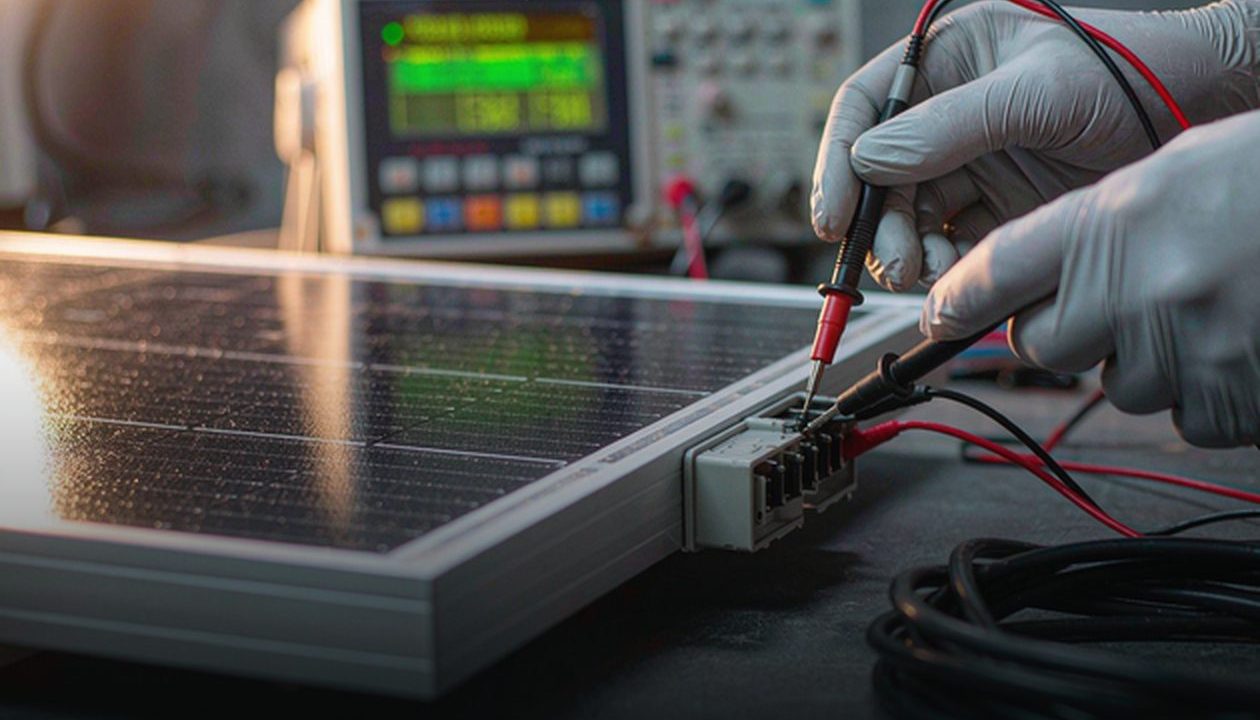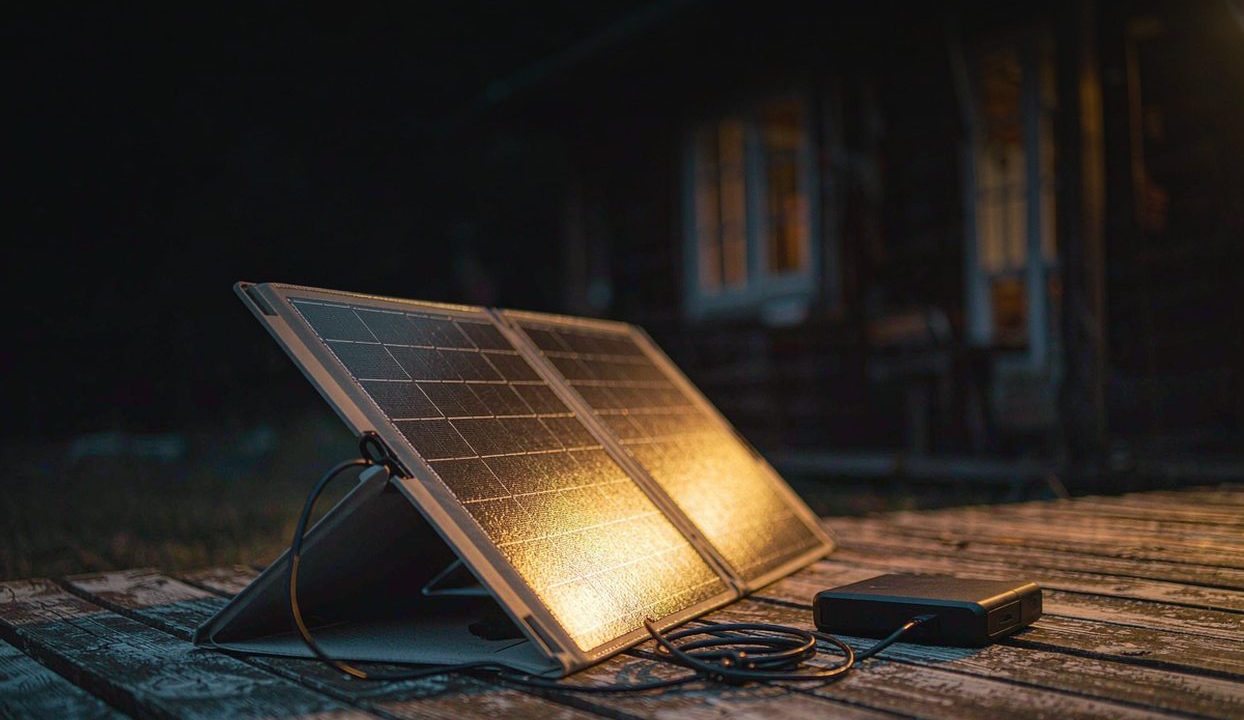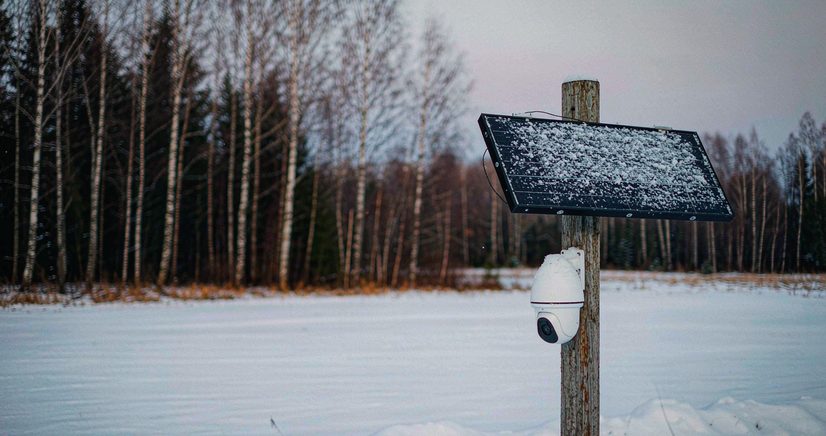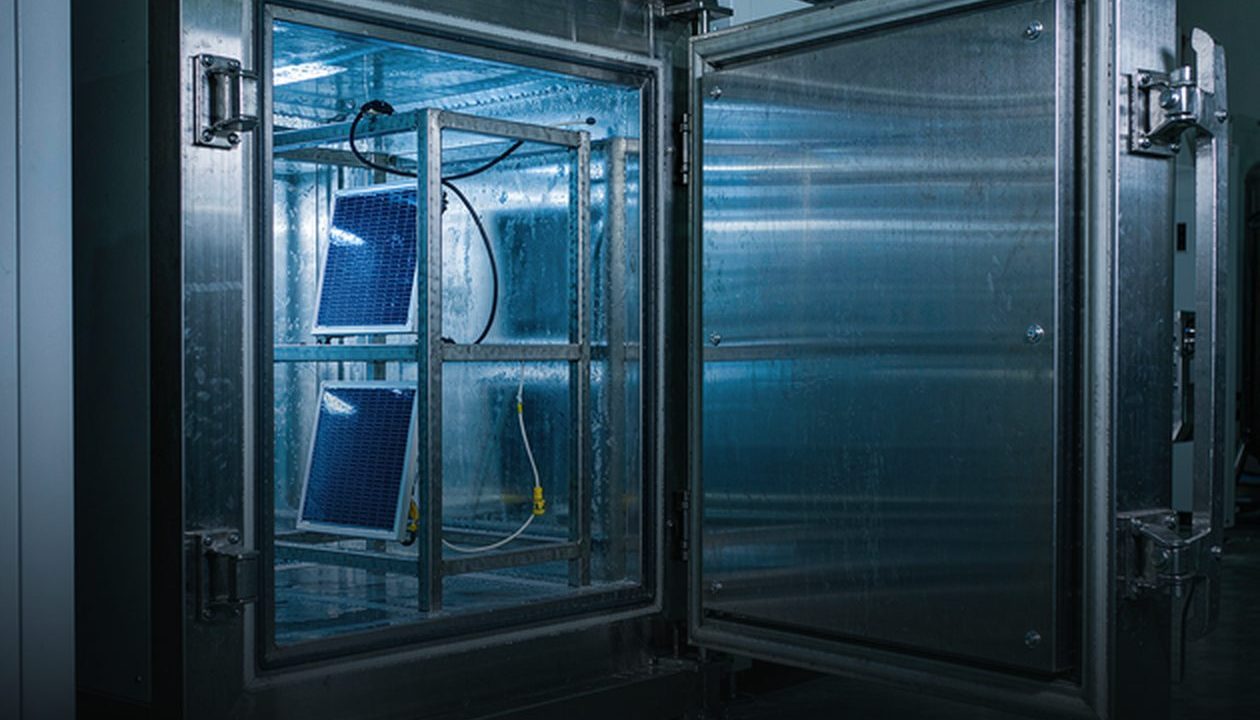
A solar camera in a cold place fails in one of two ways: the panel stops making power, or the battery stops taking it. On a clear January day the panel is usually fine — cold is kind to silicon. The battery is the part sitting at 0 °C, and it is the part that says no.
Why lithium refuses below zero
Charging a lithium iron phosphate cell below 0 °C pushes ions into the anode faster than the anode can absorb them. The excess plates out as metallic lithium: capacity that does not come back, and in bad cases a path that turns the next charge into heat.
So a battery worth installing has a low-temperature cut-off. The BMS opens the charge circuit at about 0 °C and closes it again once the cells are back above roughly +5 °C. Discharge is untouched — most cells will deliver down to −20 °C, just with more internal resistance and a little less usable capacity.
What that looks like in the app
The camera reports “charging” and 0 A. The panel is at 18 V open circuit, the controller is working, the sun is out, and no current moves. This is the single most misdiagnosed winter fault on a solar camera: the panel gets replaced, then the controller, then the camera, and the battery was simply cold.
Lead-acid is not the escape route
Lead-acid accepts charge when cold, which looks like an advantage until you read the rest of the sentence: it accepts it slowly, and a battery left half-charged in the cold sulphates while it waits. Its capacity also falls by roughly one per cent per degree below 25 °C, and a discharged battery freezes — a flooded cell at 50% state of charge is already in trouble around −20 °C, and at 20% it freezes near −5 °C. A frozen battery is a broken battery.
Four things that actually help
- Keep the battery warm, not the panel. The cells inside the camera or inside an insulated box on the warm side of a wall will sit several degrees above ambient. That is often the whole fix.
- Oversize the panel, not the battery. A cold battery charges in a narrower window. More panel turns a two-hour window into a full charge; a bigger battery just gives you more cold capacity you cannot fill.
- Steepen the tilt for winter. A panel 15° steeper than the summer angle faces the low sun more squarely and sheds snow on its own, which matters more in December than the summer output it gives up.
- Do not fight it with heat. A heater pad on a 20 W panel spends more than it saves. Insulation is cheap and uses no power; heating uses power you do not have in the month you need it most.
Sizing for the worst week, not the average
Take a camera that uses 5 Wh a day. In December, at 1.2 peak sun hours and a 0.7 derate for angle, dirt and controller losses, the panel has to be at least 5 ÷ (1.2 × 0.7) = 6 W just to break even on an average day. Average days do not run cameras through a week of cloud, so the panel goes up from there and the battery carries two or three days of it.
Cold is not the enemy of a solar camera. Cold plus a flat battery is — and the flat battery is the part the panel cannot fix while the cells are below zero.